
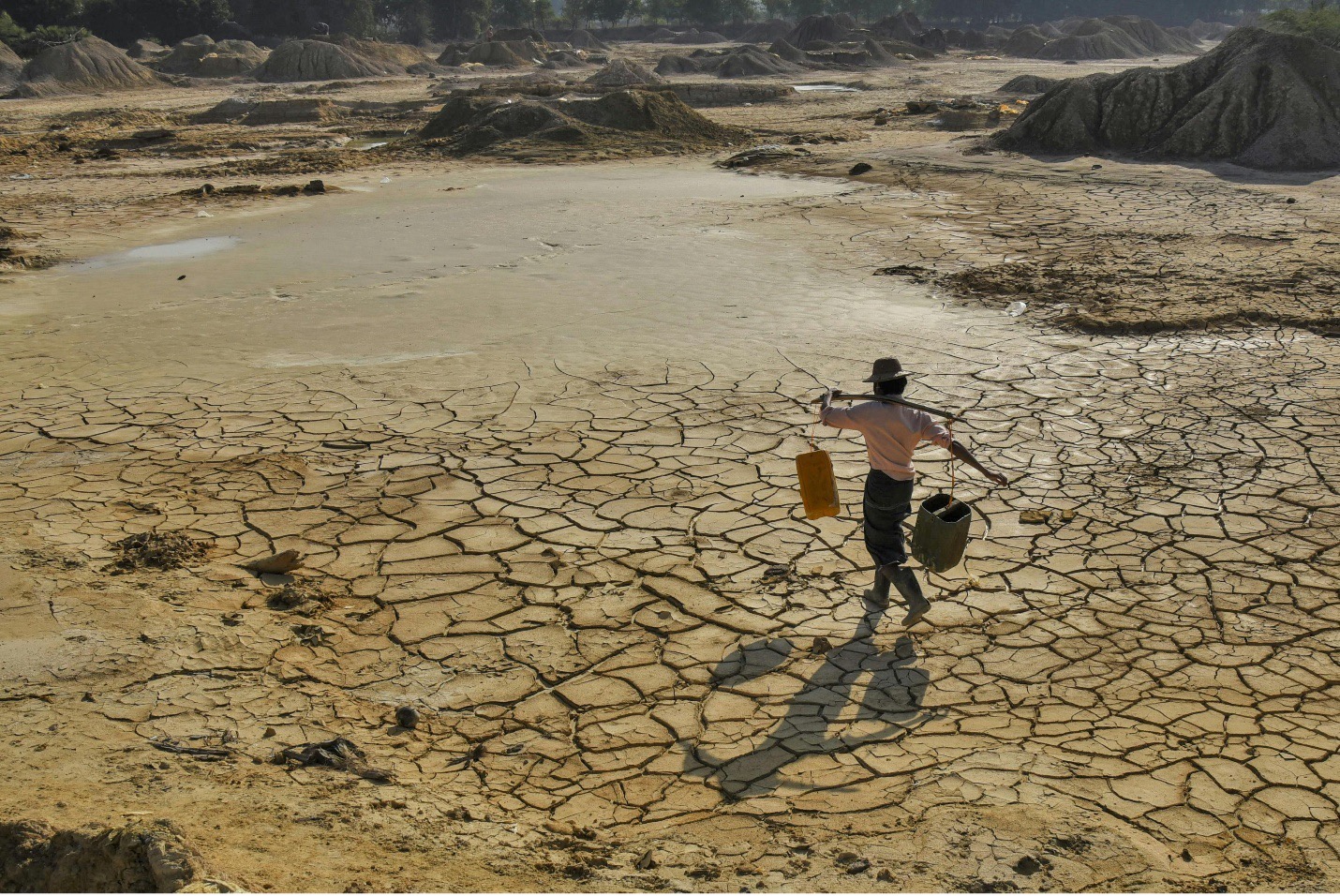
Image from Yale University
The Influence of Climate Change on Global Health
The rise in the global average surface temperature since the beginning of the twentieth century caused changes to geographic and shifts in elevated temperatures, including a reduction sea ice and snow coverage, increased flooding, and shifting limits of ecosystems for animals and plants.
The stresses driven by global warming, such as extreme weather conditions, heat waves, flooding, hurricanes, and salt in the water, affect people’s daily lives all over the world and have serious negative effects on health, including inadequate nutrition, transmission of diseases, and a lack of access to clean water and air.
The Potential Risk of Global Climate Change to Human Well-Being
Regardless of notable improvements in sanitation and health care access, the risk of infectious diseases remains elevated due to current regional shifts related to climate change, growth in populations, urbanization, and migration.
A variety of microorganisms having various pathogenic, transmissibility, and survival potentials are considered infectious agents, including bacteria, fungi, viruses, and parasites. It is widely acknowledged that in need for readiness for public health crises, pathogens having epidemic capacity have more focused attention. To evaluate differences in regional vulnerability.
Vulnerable Geographic Regions and Health Inequity
The results of infectious diseases have been frequently observed to be significant in those who are most vulnerable worldwide due to geographical inequities in health services.
As a complex phenomenon involving physical, socioeconomic, and political factors that seriously impact human response to threats, vulnerability has evolved from being viewed as mere weakness within an ethnic group or community. It should be recognized that vulnerability to infectious disease is not limited to biological characteristics but is rooted in socio ecological factors and behaviors that lead people to infectious diseases.
Barriers to Healthcare Access
The accessibility to healthcare currently suffers by several of fundamental problems in Uganda and East Africa, such as a lack of workforce, insufficient or no insurance for healthcare, transportation issues, and a lack of infrastructure. These difficulties establish an unstable base on which the effects of climate change are being increasingly multidimensional.
The rising temperatures are causing vector-borne illnesses like dengue fever and malaria to spread geographically, while altering patterns of rainfall have an impact on the frequency of watery diseases like cholera. Healthcare specialists in six African nations Ghana, Nigeria, South Africa, Namibia, Ethiopia, and Kenya confirmed high levels of warming-related health consequences. The already overwhelmed healthcare systems are overburdened by this shifting and increasing disease burden, which reduces vulnerable individuals from having access to immediate and high-quality care.
Inequality, System Overload, and Migration
As climate-related disasters become more frequent, many people are forced to leave their homes in search of safety. This sudden displacement often interrupts medical care, especially for individuals with chronic conditions, pregnant women, and older adults who depend on regular health services. When displaced families arrive in new communities, local health systems are often already under pressure struggle to meet the increased demand.
Beyond physical strain on health facilities, displaced populations face additional challenges such as financial hardship, lack of documentation, and unfamiliar healthcare systems. As highlighted by the World Health Organization and the World Bank, climate driven displacement deepens existing health inequalities, particularly in low income and vulnerable regions.
The Transition to Healthcare Systems That Have Climate Resilient
There are several ways to promote climate-resilient sanitation at the national nlevel procedures that are consistent with the six building blocks of climate resilient health systems. Leadership and governance, health information systems, health workforce, technology, service delivery, and financing are the six fundamental components. Long-term preparation for sufficient reliable supply of water for consumption should be performed with consideration of the increasing external uncertainty carried on by environmental and climatic change. By taking into account the effects of climate variability and change, the water security strategy provides an organized framework for managing these risks.



No responses yet