
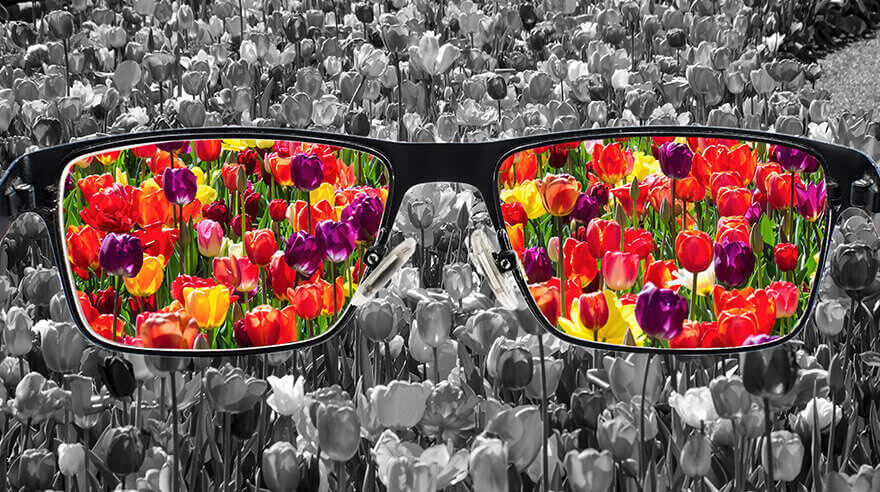
Image from Sharp
Colour blindness is a visual deficiency caused by issues with light-sensitive cones in the retina, which may be missing or mutated. This results in the brain receiving incorrect stimuli, making it difficult to distinguish between certain colours or, in rare cases, perceive any colour at all. While often inherited, it can also result from illness, accidents, chemical exposure, or aging.
Main Types of Colour Blindness
- Protanopia: Inability to perceive red light.
- Deuteranopia: Inability to perceive green light.
- Tritanopia: Inability to perceive blue light.
- Monochromacy: Total inability to perceive any colour.
How Colour Blind Glasses Work
For those with colour vision deficiencies, overlapping light wavelengths can make certain colours indistinguishable. Colour blind glasses use specialized lenses to:
- Filter wavelengths: They block specific light waves to alter signals sent to photoreceptor cones.
- Increase contrast: By filtering the “confusing” nuances, they create greater contrast between tones.
- Enhance vision: While they do not “cure” the condition, they allow users to better distinguish hues and navigate the world more effectively.
Limitations and Considerations
Despite their benefits, there are several downsides to these devices:
- Efficiency: They only enhance hue discrimination rather than providing a permanent cure, leading to some scientific skepticism.
- Cost: Prices are significant, typically ranging from $100 to $400 or more.
- Functionality: They do not solve colour blindness entirely but act as a tool to reduce daily difficulties.



No responses yet