
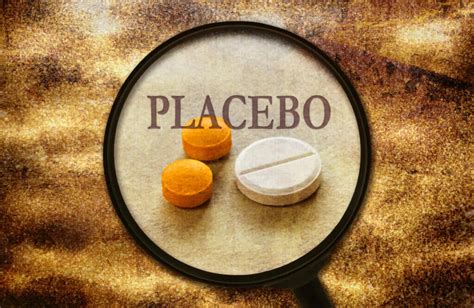
How many times have you heard this common expression, and how many times have you dismissed it as a hopeful remark? While it’s true that a high self-esteem isn’t the only step a person has to take to achieve a goal, this saying actually has some scientific truth hidden behind it. Multiple studies and experiments have shown that believing in a certain outcome actually leads to the expected effect, in some circumstances. This complicated phenomenon is called ”The Placebo Effect”.
What is the Placebo Effect?
The placebo effect occurs when a chemical or physical phenomenon takes place without any direct ”real” stimuli. Most of the time, the intended effect is administered through psychological hints. In daily practice, this phenomenon is said to play a role in situations that some might call ”delusional”: wearing a lucky item and securing a win with its help, or believing that you will ace a test even if the odds are against you, then getting a top grade. In scientific domains, tough, the placebo effect appears vastly, including in medicine.
The Placebo Effect in Medicine: A Small History
This unbelievable phenomenon actually has its roots in this science of well-being, although its definition has since stretched further. As early as Antiquity, people noticed the potent effect of believing in a cure. The philosopher Plato, a proponent of holistic medicine, described how a medicinal herb for headaches could only be effective if a corresponding charm were uttered at the same time; without the charm, the “leaf” would be useless. Only the charm, which was not medically effective, would enable the medicinal herb to drive away the headache. Similarly, the famous physician Galen of Pergamon considered patients’ trust in medicines and in their physician to be more important than the active substances administered per se.
The term placebo first appeared in a medical dictionary in around 1800, as the name for a remedy administered as a medicine without an active ingredient. “I will please” is the literal translation of “placebo” from Latin. The term appeared in the late Middle Ages to describe mourners who loudly lamented the deceased in exchange for payment. The Scottish physician William Cullen is thought to have been the first to use the word placebo in a medical context. In the late 18th century, he administered mustard powder as an external treatment to patients with no hope of recovery, as a “pure placebo,” as he called it. Although he considered the ointment to be ineffective, he saw his medical duty in giving hope to a seriously ill patient through the use of a purportedly effective medicine. Therapeutic options were limited in any case, and no effective remedy was available for many diseases at that time.
Types of Placebos
Nowadays, there is a distinction between the two common medicinal types of placebos: pure and impure. A pure placebo is a straightforwardly fake treatment, a sugar pill, for instance, that is represented as a drug. Impure placebos can be vitamins, nutritional supplements, antibiotics for viral infections, sub-clinical doses of drugs, unproven complementary and alternative medicines, or unnecessary blood tests to calm an anxious patient. The latter term refers to placebos with a certain medical efficiency, yet a very limited one. Both types have raised ethical concerns, yet the undefined medical limits seem to fuel the prevalence of placebos in medicinal use.
Controversies
How would you feel if you found out that a placebo was administered to you during a certain illness? Because legislation in the medical field has failed to address this phenomenon, it is highly likely that you have indeed received a ” fake solution”. Researchers at the Universities of Oxford and Southampton discovered that 97% of UK doctors have used ‘impure’ placebo treatments, while 12% have used ‘pure’ placebos. As concerning as this may seem, the lack of limitations around this phenomenon stemmed quite a few other unethical experiments. Some pills circulating in the market are also thought to be placebos, taking as an example some antidepressants. As general awareness starts to evolve further in this direction, tough, the public might be able to distinguish an effective medicine from an almost effective one, and legislation around this issue might change.
The Nocebo
The placebo effect refers to an expected positive outcome. The nocebo effect is the complete opposite. It describes a situation where a negative outcome occurs due to a belief that the intervention will cause harm. It is a sometimes-forgotten phenomenon in the world of medicine safety. Similar to the placebo, the term ”nocebo” also comes from Latin, its meaning being ”to harm”. Both phenomena arise from the imaginary scenarios believed by the patient, but the existence of the latter one is often forgotten. Interestingly, the nocebo is theorized to occur in treatments of some diseases, for example in asthma, but studies are only beginning to shed light on the unknown medium of this phenomenon.
Conclusion
Our beliefs hold more power than we think. Our faith or disbelief in medical practitioners can lead to outcomes that have no chemical basis. The vast filed of placebos is currently undergoing exploration, but if our mind is capable of producing physical outcomes on its own, who knows how far this phenomenon can evolve?



No responses yet